Social Media Marketing
Less or More? The Growing Divide Between Minimalist and Maximalist Social Media in 2026
Have you ever found yourself scrolling through your feed and wondering why some posts feel like soothing breaths of fresh air while others hit you like a double shot of espresso? Welcome to the social media realm of 2026. In an era shaped by AI-designed feeds, hyper-personal expression, and…
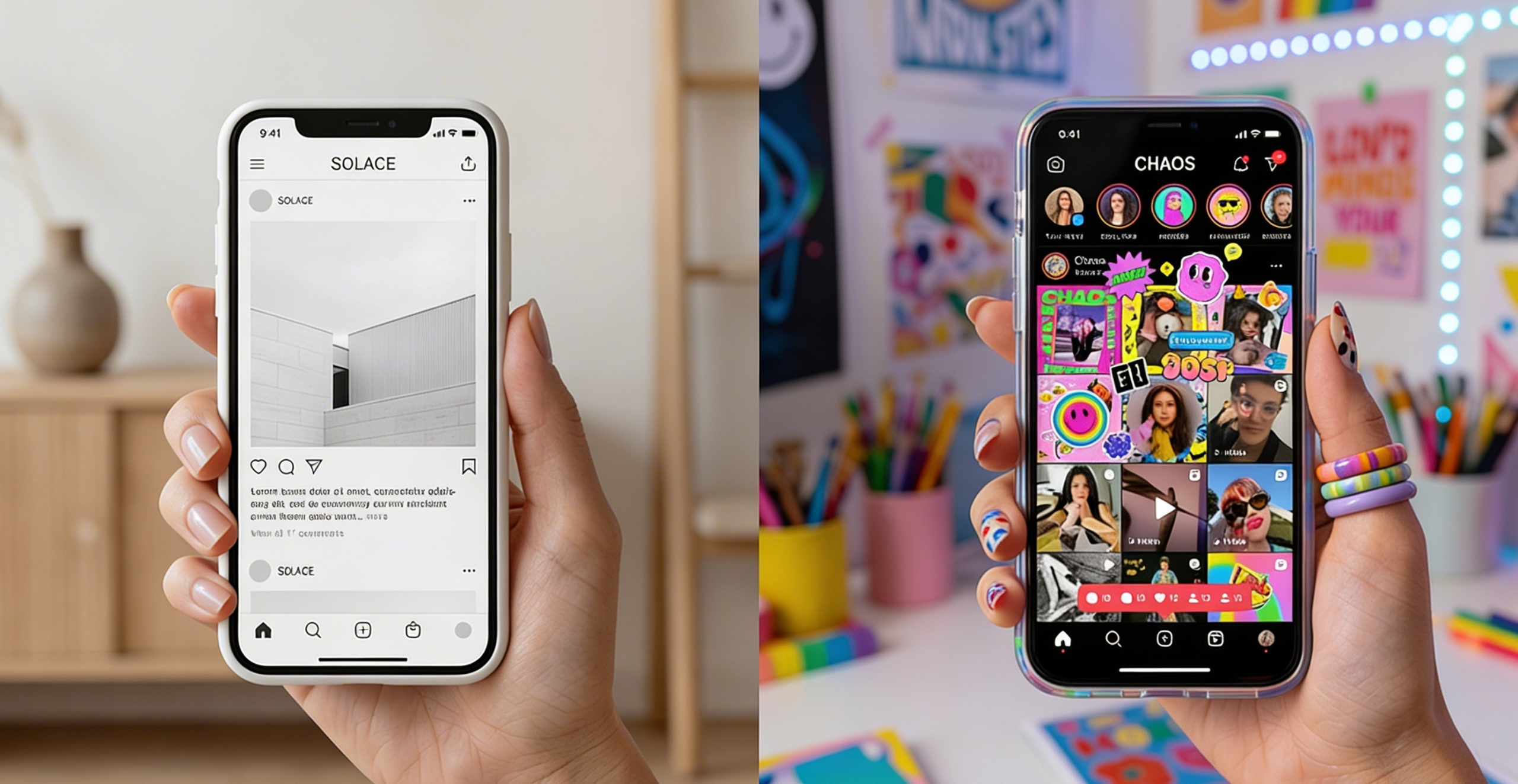
Have you ever found yourself scrolling through your feed and wondering why some posts feel like soothing breaths of fresh air while others hit you like a double shot of espresso? Welcome to the social media realm of 2026. In an era shaped by AI-designed feeds, hyper-personal expression, and infinite content production, the way we create and consume content has splintered into two dominant visual languages: Minimalism and Maximalism. One lives by “less is more.” The other insists “more is never enough.” So in this clash of calm versus chaos, who’s actually winning the social media marketing game? And what does that mean for brands and creators navigating a scroll where both aesthetics coexist within seconds of each other? Let’s unpack it. 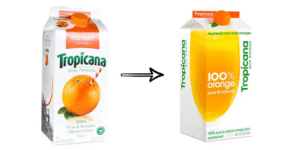 Now, imagine if the brand abandoned this strategy to chase engagement with unhinged, Duolingo-style memes or loud, hype-driven visuals. The dissonance would be immediate. The maximalist approach wouldn't just be a stylistic mismatch; it would actively erode the trust they have carefully built. In their case, a minimalist social presence isn't just an aesthetic choice; it is a direct reflection of their brand promise. Look at Dove. It strategically uses minimalism just at the product design level with clean, simple packaging signalling clinical efficiency. But for its campaigns, it leans into maximalism with bold, loud, expressive social movements that fight for attention on cultural issues. It reminds us that social media in 2026 is not just about balance, it’s about choosing different aesthetic strategies at different points in the customer journey to achieve different business goals. Want sharper clarity on your brand voice and a social media marketing strategy that actually converts online? At ARM Worldwide, our brand strategists and social media experts help you define your positioning, craft a distinct visual language, and build a presence that performs, not just trends. Get in touch with us and let’s evolve your brand into one that stands out!
Minimalism: The Quiet Renaissance
Minimalist social media marketing leans into essentialism. Subtle designs, clean layouts, shorter captions, focused storytelling, thoughtful pacing; everything is selective and intentional. But minimalist social media is not always rigid with stark white grids or purely functional typography. In 2026, it often shows up as soothing visual storytelling where the experience is more calm and curated without being chaotic. Take Apple for instance, particularly its “Shot on iPhone” executions across Instagram and YouTube. It centers on a single visual idea which is often one striking photograph or a short cinematic clip, accompanied by minimal text. The composition is clean, the lighting is soft, and the storytelling is restrained yet emotionally resonant.How Minimalism Rose?
The reasons why brands began embracing simplicity were:- Strategy of confidence: Minimalism is the game of the confident ones, the brands that believe their products, message, or inherent value is so strong, it doesn’t need decoration. The quietness is a “pull strategy”, a signal of power that naturally attracts the consumers without having to be loud. Apart from that minimalist designs are easier to process placing the spotlight on product, message, or story without distraction. This immediately creates trustworthiness, exclusivity, and premiumness, the facets most sought after by luxury and premium labels.
- Efficient to scale: Minimalism is a relatively safe ground to play on. Neutral colors rarely clash. Simple typography rarely overwhelms. Clean layouts rarely fail. So, even creators without strong design instincts could execute it well. In the era of Canva templates, AI-assisted layout tools, and preset-based editing apps, digital minimalism became algorithm and creator friendly without demanding high production complexity.
- Reality over fabrication: Social media has long been criticized for projecting hyper-curated lives that look more like a fairytale. Minimalist creators pivoted toward something softer, slower mornings, imperfect routines, reflective storytelling. YouTubers like Lana Blakely and Malama Life embody this shift. The focus is less on performing perfection and more on emotional clarity.
- Premium and luxury brands signalling refinement and quiet exclusivity, reinforcing the perception of elevated taste like Bare Necessities and Nicobar.
- D2C startups positioning themselves as modern and science-backed like The Derma Co, Foxtale, and Minimalist.
- Sustainability-focused businesses emphasizing conscious consumption, like Okhai.
Maximalism: The Bold Expression
In contrast to Minimalism, Maximalism is an energetic, and often wild interplay between design, text, speech, and ideas. It is expressive and demands attention in every frame. Its motive is to evoke strong emotions, spark curiosity, and command presence in crowded feeds. Layered visuals, dynamic typography, vibrant palettes, high-end edits are all hallmarks of maximalist design. But don’t mistake maximalism as chaos. In 2026, it has evolved into something with strategically curated intensity designed to make you feel something instantly and linger with you long after you scroll past. If you have seen Duolingo’s posts on Instagram, you will be well aware of its chaotic feed filled with absurd humor, meme culture, exaggerated reactions, trending audios, surreal edits, and intentionally unhinged storytelling, some key elements that dominate attention in saturated feeds.Why Maximalism Works as a 2026 Social Strategy?
Here is how Maximalist Social Media took center stage and became the new strategy of brands for social marketing.- Stand out in a Saturated Feed: In 2026, brands compete not just for attention, but for distinction. Feeds demand bold attention now as minimalism became a trend rather than a philosophy painting social media with muted tones and repetitive layouts. Maximalism hence emerges as a sharp strategy, interrupting the scroll deliberately through layered visuals, high contrast edits, and eclectic overlays to ensure campaigns are noticed, remembered, and engaged.
- Strategy of Interruption: When attention is scarce, standing out translates directly to performance. Maximalism becomes the weapon to win the brutal war for attention in a commoditized, algorithm-driven feed. Bold creativity and controlled chaos stops the user's thumb. It's a "push" strategy through which brands align with the energy, humor, and visual language of their most influential audience, driving measurable growth.
- Rise of Hype Culture: Social media has become a stage for high energy moments. Instead of simple announcements, bringing in excitement through teasers, dramatization, limited drops, countdowns, and cultural collaborations is what creates the buzz. This anticipation-driven social media marketing strategy thrives on urgency and spectacle, which naturally aligns with maximalist design.
- Youth-first brands and pop-culture labels positioning themselves as bold, internet-native, and culturally fluent like Souled Store and Bewakoof.
- Entertainment-driven businesses that rely on high-energy visuals and dramatic storytelling to capture attention instantly like Spotify and Red Bull.
- Beauty and makeup brands encourage experimentation, self-expression, and bold looks, like Mars cosmetics and plum.
Minimalism vs Maximalism: The Growing Divide in 2026
If this conversation makes you want to swing entirely toward maximalism, pause for a second. Minimalism hasn’t disappeared. It still performs because of its clarity, confidence, and premium positioning. But at the same time, maximalism is gaining momentum because it delivers visibility, energy, and cultural relevance. So, the key takeaway in 2026 isn’t choosing minimalist vs maximalist social media but understanding where your brand’s social marketing sits on the spectrum. It’s all about maintaining balance. Take the Instagram feed of Kelsang Sherpa Pradhan (@thehybriddesigner.np) as an example. Is it purely minimalist? Not really. Is it fully maximalist? Not quite. It operates in a calibrated middle ground. There’s restraint in composition, but boldness in experimentation. It has a clean structure yet expressive detailing, a combination that makes his designs intentional and soothing, but never boring. That balance creates intrigue. So, instead of asking, “maximalism or minimalism” for your social media strategy, the better questions to ask yourself are:- Which design style suits my business? And does this speak to my brand’s vision?
- What perception am I trying to build? Is it premium, disruptive, playful, authoritative?
- Who is my audience, and what visual codes do they currently respond to? How is their taste evolving?
So, Less or More?
Adopting a design style purely because it feels creatively exciting is rarely a sound decision. The Tropicana packaging redesign is a classic cautionary tale about the dangers of generic minimalism. The brand stripped away its most distinctive asset: the orange pierced with a straw, and replaced it with a clean but forgettable design that diluted its brand recognition overnight. That same principle applies directly to a brand’s social media feed in 2026. If your unique brand voice is built on a specific type of vibrant, user-generated content or an ownable visual chaos, adopting a sterile, minimalist grid for the sake of a trend would be a strategic error. You would be removing the very cues that your audience uses to recognize you in a crowded feed, effectively erasing your own memory structure. Conversely, consider the brand Minimalist. Its credibility is rooted in clarity, ingredient transparency, and a clinical, science-backed position. Their Instagram feed reflects this with clean layouts, direct educational content, and a muted color palette. Now, imagine if the brand abandoned this strategy to chase engagement with unhinged, Duolingo-style memes or loud, hype-driven visuals. The dissonance would be immediate. The maximalist approach wouldn't just be a stylistic mismatch; it would actively erode the trust they have carefully built. In their case, a minimalist social presence isn't just an aesthetic choice; it is a direct reflection of their brand promise. Look at Dove. It strategically uses minimalism just at the product design level with clean, simple packaging signalling clinical efficiency. But for its campaigns, it leans into maximalism with bold, loud, expressive social movements that fight for attention on cultural issues. It reminds us that social media in 2026 is not just about balance, it’s about choosing different aesthetic strategies at different points in the customer journey to achieve different business goals. Want sharper clarity on your brand voice and a social media marketing strategy that actually converts online? At ARM Worldwide, our brand strategists and social media experts help you define your positioning, craft a distinct visual language, and build a presence that performs, not just trends. Get in touch with us and let’s evolve your brand into one that stands out!